The Hole Truth: A Guide to Preventing Cavities
Tooth decay is one of the most common health conditions in the world, but it’s also one of the most preventable. Cavities don’t appear spontaneously—they develop gradually when the right conditions are present over time. By understanding what causes tooth decay and making a few simple changes to your daily routine, you can dramatically reduce your risk of developing cavities and avoid unnecessary dental treatment.
What Is a Cavity?
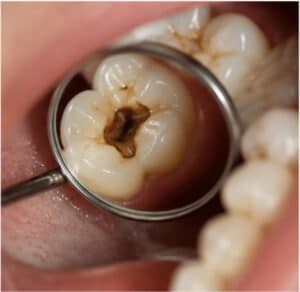
A cavity is a hole that forms in a tooth. The outer layer of the tooth, the enamel, is the hardest substance in the human body, but it isn’t indestructible. If it’s exposed to acid-creating bacteria often enough, it begins to lose minerals and weaken. Over time, this damage progresses until a permanent hole develops in the tooth.
Once a cavity has formed, the tooth cannot repair itself. Early stages of decay can often be stopped or even reversed, but once a hole develops, treatment is needed to restore the tooth.
What Causes Tooth Decay?
For a cavity to develop, three things are needed:
- Bacteria
- Sugar
- Time
If you remove any one of these three factors, tooth decay cannot occur.
Bacteria
Your mouth naturally contains millions of bacteria. Most are harmless, but some feed on the sugars in your diet. As they digest these sugars, they produce acid as a waste product. It is this acid—not the sugar itself—that attacks your teeth. The bacteria live in dental plaque, the sticky film that constantly forms on your teeth. This is why good brushing and cleaning between your teeth are so important. The less plaque present, the fewer acid-producing bacteria there are.
Sugar
The bacteria responsible for tooth decay use sugar as their fuel. Every time you consume sugary foods or drinks, the bacteria produce acid that attacks your teeth. Many people are surprised to learn that it isn’t just sweets that contain sugar. Soft drinks, fruit juices, sports drinks, flavoured coffees, biscuits, cakes, breakfast cereals, dried fruit, and many processed foods all provide fuel for these bacteria. Even foods marketed as “healthy” can contain significant amounts of sugar.
Time
Time is the often-overlooked ingredient in tooth decay. Every time you eat or drink something containing sugar, the bacteria begin producing acid almost immediately. This acid attack continues for around 30 to 60 minutes before your saliva gradually neutralises it and begins repairing the damage. If you eat or drink frequently throughout the day, your teeth spend much longer under acid attack, giving them very little opportunity to recover.
Understanding the Stephan Curve
One of the most important concepts in preventing tooth decay is the Stephan Curve. The Stephan Curve describes what happens to the acidity in your mouth after eating or drinking. Within minutes of consuming sugar, the bacteria in plaque produce acid, causing the acidity in your mouth to rise rapidly. Once the mouth becomes too acidic, minerals begin to dissolve out of the enamel, weakening the tooth. Over the next 30 to 60 minutes, saliva gradually neutralises the acid and replaces many of the lost minerals. This repeated cycle of acid attack eventually overwhelms the tooth’s ability to repair itself, leading to holes, or cavities, developing in the teeth.
Why Snacking Matters
Many people assume that the amount of sugar they eat is the most important factor. In reality, how often you consume sugar is often even more important. Sipping a soft drink throughout the afternoon or grazing on snacks all day keeps your teeth under almost constant acid attack. Even if each snack contains only a small amount of sugar, every eating occasion restarts the cycle. That’s why we generally recommend limiting food and sugary drinks to no more than five eating or drinking occasions per day, including meals. Giving your mouth several hours between meals allows saliva enough time to repair the early damage caused by acids.
If you need a drink between meals, water and milk are the best choice.
Preventing Tooth Decay
Fortunately, preventing cavities is straightforward. The goal is to reduce two of the three factors needed for decay: bacteria and sugar.
Reducing bacteria means maintaining excellent oral hygiene. Brushing twice daily with fluoridated toothpaste and cleaning between your teeth every day removes plaque before harmful bacteria can build up. For more detailed advice on brushing, flossing, and fluoride, be sure to read our Oral Hygiene blog. Reducing sugar doesn’t necessarily mean eliminating your favourite treats. Instead, try to limit how often you consume sugary foods and drinks, avoid frequent snacking, and choose water between meals whenever possible. Fluoride also plays an important role. It strengthens enamel, helps replace minerals lost during acid attacks, and makes teeth more resistant to future decay. This is why we recommend brushing twice daily with a fluoridated toothpaste and using the spit-don’t-rinse technique after brushing.
Small Changes, Big Benefits
Tooth decay is avoidable. Understanding how cavities develop allows you to take control of your oral health. By maintaining excellent oral hygiene, limiting how often you consume sugary foods and drinks, using fluoridated toothpaste, and attending regular dental examinations, you can greatly reduce your risk of developing cavities.
If you would like advice on preventing tooth decay or are concerned you may have a cavity, our team is here to help. Whether you need a routine examination, preventive advice, or treatment, book your consultation today.